Articles

25 straight answers, every number sourced.

33,570 words on what the tools cost, what an AI agent really does in an office, what a certificate of insurance must show, and why a machine does not quote your website. Median 53.5 numbers per 1,000 words, 189 cited sources, 25 of 25 carry a table you can read off.
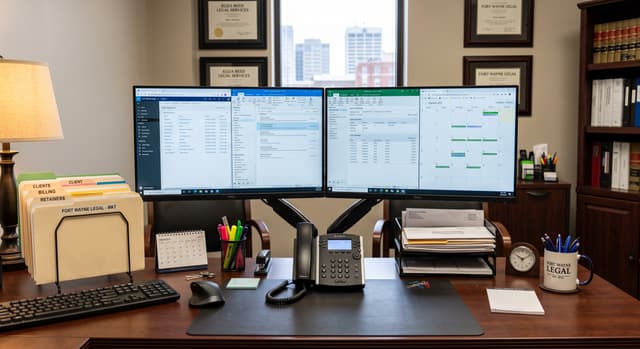
An office desk with two monitors and a desk phone.
The desk these articles are about. Every figure on this site is tied to a vendor page, a statute or a federal dataset.
GroupArticlesWordsSourcesWhat it answers
What it costs56,85443Real numbers off vendor pricing pages, with the arithmetic shown.
AI in your office56,65731What an agent does on a normal week, and where it breaks.
Before you buy56,71837Decide, ask, tell the crew, and pick what to build first.
Getting found67,96447Why a machine does not quote your site, and what to change.
The paperwork45,37731Certificates, change orders, held money and getting paid.

Word and source counts are counted from the files these pages are built from, not estimated.

What it costs

Real numbers off vendor pricing pages, with the arithmetic shown. 5 articles, 43 cited sources.

What an AI phone agent actually costs per minute One minute of an answered AI phone call runs about $0.07 to $0.31 on the managed platforms, going by the headline range on Retell's own pricing page. That is the number most owners want. It is also the least useful number here. The real cost is a stack of small charges, and each one is a row in the table below. 1,289 words, about 6 min at 200 words a minute, 7 sources What it costs to replace a dispatcher, in real numbers A dispatcher costs about $71,900 a year in wages and benefits, based on the Bureau of Labor Statistics median wage for dispatchers and the BLS employer benefit survey. The software that does the routing part of that job costs about $2,500 to $5,000 a year, added up from the public price pages of Housecall Pro, OptimoRoute, Routific and Twilio. That gap is real. But the gap is not the whole story, and this article shows the parts the price pages leave out. 1,528 words, about 8 min at 200 words a minute, 13 sources Replacing a marketing coordinator: the actual setup The median pay for a marketing specialist is $37.87 an hour, or $78,760 a year, in the BLS wage survey as posted on O*NET for code 13-1161. That is the number most owners have in their head when they think about replacing the role with software, and it is the wrong number to start with. This article shows what the job is, what an agent can hold, and what rules it has to obey. 1,389 words, about 7 min at 200 words a minute, 6 sources What contractor software actually costs, all in Only 3 of the 8 contractor software vendors I checked will show you a price without a sales call, based on my read of each company's public pricing page. Those 3 are Jobber, Housecall Pro and Contractor Foreman. The other 5 are ServiceTitan, Buildertrend, JobNimbus, FieldPulse and Procore, and each one hands you a Request Pricing button instead of a number. Here is every number those 8 pages show. 1,284 words, about 6 min at 200 words a minute, 8 sources Jobber alternatives, honestly We read the pricing pages of 9 field service and contractor software products, and only 2 of them show the plan price, the seat rules and the card fees on one page. Jobber is one of those 2. That surprised us. Most of the other sites will not tell you the cost until you book a call, so here is what each one does say, from its own pricing page. 1,364 words, about 7 min at 200 words a minute, 9 sources

AI in your office

What an agent does on a normal week, and where it breaks. 5 articles, 31 cited sources.

What happens the first week after you install an AI receptionist A human receptionist earns a median of $18.27 an hour, about $38,010 a year, by the count the U.S. Bureau of Labor Statistics publishes in its Occupational Outlook Handbook. That is the seat many service businesses cannot fill. So you install a phone agent, and the first week is where you find out what the sales page left out. Here is what to check, using only numbers we could source. 1,291 words, about 6 min at 200 words a minute, 6 sources Why 99.5 percent accurate means one in five tables is wrong Say a tool reads each box of a table right 99.5 times out of 100. That sounds like 1 miss in 200, which sounds fine. But you bill from the whole table, and the whole table has to be right. 1,368 words, about 7 min at 200 words a minute, 7 sources What stays human when you automate a front office The US Department of Labor's O*NET database lists 19 separate tasks for a receptionist, and by my own count only 4 of them need a body in the building. That count matters if you run a plumbing, roofing or cleaning company and you are looking at an AI phone agent. This article goes task by task and says which ones an agent can hold and which ones a person keeps. 1,378 words, about 7 min at 200 words a minute, 6 sources Why most AI pilots die at week three About 1 in 5 US businesses used AI in the past two weeks, according to the Census Bureau's Business Trends and Outlook Survey, a panel of roughly 20,000 businesses asked every two weeks. That number sounds like a wave. It is not. Most of those businesses are using a light tool now and then, not running a system that holds a job. 1,327 words, about 7 min at 200 words a minute, 6 sources The jobs you cannot fill, and which ones an agent can hold About 35 out of every 100 small business owners have a job open they cannot fill, by the NFIB Jobs Report count of its member owners. That is the seat you keep covering yourself after dark. This article is about which of those seats a software agent can hold, and which it cannot. The honest answer is shorter than the sales pitch. 1,293 words, about 6 min at 200 words a minute, 6 sources

Before you buy

Decide, ask, tell the crew, and pick what to build first. 5 articles, 37 cited sources.

How to tell if your business is ready for an AI agent Only 24 out of every 100 small employers use AI at all, in the NFIB Research Center survey of 521 member businesses. The other 76% do not, per the same NFIB survey. So if you are asking whether your shop is ready, you are already ahead of most owners. This article gives you the real numbers, a plain checklist, and an honest answer about when to wait. 1,369 words, about 7 min at 200 words a minute, 7 sources The questions to ask before you buy an AI system Of the 1,862 technology buyers TrustRadius surveyed for its Buying Disconnect Report, 63% said they used AI while shopping for software. That same TrustRadius survey found 83% of buyers shortlisted 3 or fewer products before they bought. So you are not going to read every review. You are going to pick from a short list and sign with one vendor. 1,301 words, about 7 min at 200 words a minute, 6 sources How to tell your staff you are automating part of their job About 52% of U.S. workers say they are worried about the future of AI in their workplace, in a Pew Research Center survey of 5,273 employed adults. That is the room you walk into when you tell your office manager a phone agent will take the first ring. Most owners handle this talk badly, or skip it. Here is how to do it in plain words, with numbers behind each step. 1,362 words, about 7 min at 200 words a minute, 8 sources How to update a twenty-year-old company systems without stopping work The oldest computer system still doing critical work in the US government is 60 years old, according to a Government Accountability Office review of 69 federal legacy systems. The 11 most critical ones in that GAO report range from 23 to 60 years old. If the government can keep a 60 year old system alive while it plans a replacement, your 20 year old shop can too. The trick is not stopping. 1,320 words, about 7 min at 200 words a minute, 8 sources What to build first when you are automating a service business There are 36.2 million small businesses in the US, and 82.3 percent of them have no employees at all, by the SBA Office of Advocacy count of Census business data. If that is you, the business is you and a phone. You cannot automate all of it at once. This page says what to build first, and why. 1,366 words, about 7 min at 200 words a minute, 8 sources

Getting found

Why a machine does not quote your site, and what to change. 6 articles, 47 cited sources.

Have AI build your website, using ours as the template A web designer on Upwork charges a median of $21 an hour, by Upwork's own count of past contracts on its web designer rate page. That is the cheapest honest number I could find for paying someone else to build your site. This article shows you how to skip that bill and build the site yourself, with an AI tool and our site as the pattern. Everything here is free to use, and we sell the install after, only if you would rather not. 1,303 words, about 7 min at 200 words a minute, 5 sources Have AI set up your SEO The most common monthly SEO retainer is $501 to $1,000, by the count of Ahrefs, which surveyed 439 SEO agencies, consultants and freelancers. That is what providers say they charge, not what a plumber with a small site ends up paying. You can have a machine do most of the setup part for close to nothing. This article shows what that setup is, what it is worth, and what it cannot do. 1,205 words, about 6 min at 200 words a minute, 10 sources How to own the internet: the five gates When Google puts an AI summary at the top of a search, people click a normal result on only 8% of visits, in a Pew Research Center panel of 900 US adults tracked across 68,879 searches. With no summary, that click rate was 15% in the same Pew panel. That is the whole game now. The few people who still reach your site have to find a phone number and tap it. 1,352 words, about 7 min at 200 words a minute, 10 sources Why your website does not show up in ChatGPT answers OpenAI's own crawler docs say 1 program, called OAI-SearchBot, decides which websites can appear in ChatGPT search answers. If that program cannot read your site, ChatGPT will not quote you. That sounds big. It is really a small plumbing problem, and most of the fix is the old work of showing up on Google. 1,372 words, about 7 min at 200 words a minute, 7 sources The one thing on a page that makes AI cite it One edit raised a page's share of a machine written answer by 41 percent across 10,000 test questions, in the GEO study by Aggarwal and coauthors, and the edit was not a keyword. It was a quote from a credible source. Numbers with a source came next. Stuffing in keywords was the only edit that made a page lose ground. 1,359 words, about 7 min at 200 words a minute, 8 sources How to write a page a machine will quote Nielsen Norman Group watched test users open new web pages and found that 79% of them scanned the page while only 16% read it word by word. A chatbot that answers a question does the same. It grabs one short passage from your page and quotes it. Make the right passage easy to grab and you get quoted. 1,373 words, about 7 min at 200 words a minute, 7 sources

The paperwork

Certificates, change orders, held money and getting paid. 4 articles, 31 cited sources.

The COI grind: what a certificate of insurance must show The ACORD 25 form has slots for 6 insurers and 8 coverage columns, and it opens by saying it confers no rights on the person holding it, which I read straight off the current form posted by the New York Department of Financial Services. That is the paper every general contractor collects from every sub. Here is what it must show, what it cannot promise, and where the real protection lives. 1,343 words, about 7 min at 200 words a minute, 8 sources How to stop losing money on change orders Change orders add 5 to 10 percent to the cost of most construction projects, according to the research summary in the Serag and Oloufa paper published by ASEE. That paper looked at heavy civil road jobs, not kitchen remodels. But the lesson holds for any crew that does extra work on a handshake. The money you lose is not the change itself. It is the change you never wrote down. 1,349 words, about 7 min at 200 words a minute, 7 sources What a general contractor should track that a solo contractor should not The average new single family home is built by 24 different subcontractors, by the count of the NAHB survey of 354 home builders. That same NAHB survey found builders hand off 84 percent of the construction cost to those subs. A solo plumber does not have that problem. A general contractor has it on every job, and the law adds paperwork for each sub. 1,382 words, about 7 min at 200 words a minute, 6 sources Getting paid faster without a payment processor A $5,000 invoice paid by card through Stripe costs you $145.30 in fees, by Stripe's own published rate of 2.9% plus 30 cents per domestic card. The same $5,000 sent by bank transfer through Stripe costs $5.00, because Stripe caps its 0.8% ACH fee at $5 per payment on its pricing page. That gap is $140.30 on one invoice, computed from those two Stripe rates. This article is about how to keep that gap, and why the honest goal is fewer processor dollars, not zero. 1,303 words, about 7 min at 200 words a minute, 10 sources
Walk the product tour

Or call (252) 666-7217. A person answers, and Alex Yeskolski wrote all 25 of these.